
The Wood Yard: Time as an Ally
Where It All Begins: The Encounter Between Oak and Time
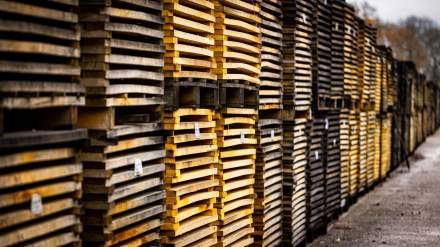
Wood is the soul of the cooper’s craft. Carefully selected from the forests of Tronçais, Allier, and the Vosges, the oak arrives in Ladoix-Serrigny still laden with its natural moisture, green tannins, and a century-old memory. Cut into staves, it begins a 2 to 3 year stay in Remond’s wood yard, where it slowly refines itself, transforming into a precise oenological tool.
In this semi-continental climate, softened by the presence of the Corton hill, the wood breathes. The cold, dry winters ensure slow and even drying. The warmer summers trigger the first aromatic transformations. The wind, subtle yet constant, provides ideal ventilation. Even the morning mist, so familiar to the village, plays its part in this gradual maturation. Ladoix-Serrigny offers the perfect environment to reveal the nobility of French oak and embed its future oenological profile.
A Living Refinement Guided by the Elements
For 24 to 36 months, the staves evolve patiently. Rain lightly rehydrates the surface to prevent cracking, the sun activates essential chemical reactions and gently dries the wood, and the wind prevents moisture from stagnating and microbial growth from occurring. Deep within the wood, invisible to the eye, a true goldsmith’s work unfolds: ellagic tannins soften, green bitterness fades, and aromas grow more complex, evoking vanilla or dried fruits. Moisture levels drop from 60% to about 12–15%. Each fiber becomes a unique aromatic vector.
After 150 years of growth in the forest, the wood takes its time to stabilize and purify itself to fulfill its destiny: accompanying great wines.
Remond’s coopers monitor this evolution with instinctive attention. They observe the golden hue that appears under the sun’s rays, run their hands over the surface to feel the wood’s firmness, and sniff the air for the slightest sign of mold. Like a winemaker stirring their champagne bottles, they regularly turn the staves, adjust the spacing, and finish refining the batches ready for high-wind exposure. Each gesture sharpens the oak’s potential a little more.
A Direct Impact on Wines and Spirits
This long process is an ingredient in itself: well-dried wood will yield smooth tannins, notes of cocoa, tobacco, or ripe fruit for reds; aromas of brioche, almond, or butter for great whites. Conversely, wood that has been dried too quickly or artificially may leave traces: aggressive tannins, herbaceous notes, or raw wood aromas. The exchange between wood and wine begins here, even before the barrel is made. What happens in the wood yard already determines the wine’s aromatic profile, structure, and aging potential. This is where Remond’s signature subtly but surely expresses itself.
More than just a storage space or a mandatory technical step, Tonnellerie Remond’s wood yard is a commitment to excellence—for nature, for heritage craftsmanship, and for winemakers. As Loïc, head of our wood yard, reminds us: “A Remond barrel is first and foremost the story of an oak that took its time. Our role is to respect that time.” In a rushed and scattered world, choosing the long path of time is a testament to mastery and a promise to great wines.