
Wood and Wine: A Silent Dialogue
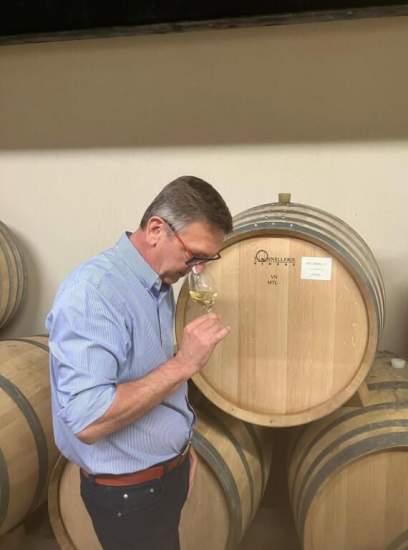
In the workshop of Tonnellerie Remond, wood never speaks loudly: it whispers, accompanies, and, above all, reveals. The art of a barrel is not to impose its own signature but to enable the wine to express its own. Though silent, this dialogue is precise to a fault, a delicate balance of countless parameters, worthy of a tightrope walker.
It all begins with the selection of French oak. Depending on its origin, growth rhythm, and terroir, each oak develops its own grain size and tannins, which correspond to distinct organoleptic qualities in the wine. A very fine grain offers subtle extraction and measured oxygenation, while a coarser grain provides structure and depth. For example, Syrah thrives with the rustic tannins of Nevers oak, while a Chardonnay aged in a Tronçais barrel; with its very fine grain and silky tannins; yields an elegant wine with white floral notes. Forests, grain, tannins, grape variety: at the first stage of the wood-wine dialogue, the combination is already multidimensional.
Then comes the factor of time. Air-drying (24 to 36 months) transforms the wood, softens it, eliminates green tannins, and refines its aromatic potential. This slow metamorphosis is essential to produce barrels capable of imparting balance, complexity, and purity of fruit to the wine. At Remond, patience is the key to finesse.
Next, it is the toasting ; the tonnelier’s emblematic gesture; that continues the conversation. Light toasting (MTL- or MTL) will highlight the wine’s freshness and tension, while more intense toasting (MTL∞ or MTL+) brings roundness, soft spices, and depth. Once again, it’s all about nuance, revealing without ever masking.
Every combination of “oak grain, drying, toasting, grape variety, and wine style” is designed as a bespoke setting. It is a highly sensitive art that Tonnellerie Remond pushes to the pinnacle of excellence. This expertise allows each barrel to be tailored to the desired typicity: the crystalline minerality of a fresh white, the silkiness of a Pinot Noir, the controlled power of a Syrah, or the aging potential of a great wine. Remond’s signature? Wood that fades into the background to better serve the terroir, the grape variety, and the winemaker’s craft. A silent partner, but an indispensable one.
In a world where winemakers increasingly seek precision, freshness, and natural expression, this dialogue between wood and wine has never been more essential, driving tonneliers to constantly adapt. Can you hear the harmony?