
From Barrel to Wine: Tailored Support for Winemakers
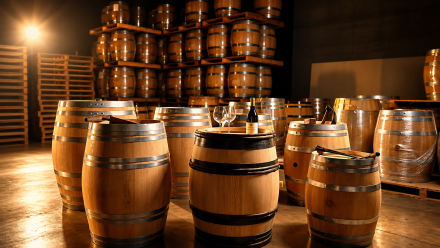
Understanding the intention to reveal the wine's identity
Before discussing the origin of the wood, its grain or its toast, let us first listen to the wine. What is its structure? How much room should be given to fruit, freshness, and tannins? Should the barrel maturation bring roundness, build structure, or preserve the delicate expression of a terroir? At Tonnellerie Remond, this dialogue with the winemaker is the starting point of every accompaniment. For the same barrel will not produce the same result depending on the grape variety, the vintage, or the personality of the wine. A finesse-driven Pinot Noir will call for discreet wood, while a more structured Cabernet Sauvignon can welcome more sustained exchanges. A solar year will demand greater restraint than a cool vintage, whose edges will benefit from being rounded off. At Tonnellerie Remond, understanding the wine always precedes the choice of wood. It means grasping the winemaker's intention: what they wish to bring to their wine, but also what they are determined to preserve.
Wood: a living material, crafted to the millimetre
Once this intention is understood, the cooper's expertise comes into play. The origin of the oak, the fineness of its grain, the toast, and the barrel's format form an inseparable set of parameters. Knowing the forests, plot by plot, as a winemaker knows their vineyards, makes it possible to anticipate different expressions: some origins bring nuances of melted vanilla and dried fruit, others more tannins and spice. The grain also modulates these exchanges: very fine, it releases its contributions slowly; more open, it favours a faster and more marked expression. The toast further refines this organoleptic palette. Light, it preserves aromatic freshness; medium, it develops notes of vanilla and almond while helping to soften the tannins; more pronounced, it reveals nuances of coffee or cocoa, capable of magnifying a powerful wine, but of overwhelming a delicate profile. Finally, the format completes this balance: a 500-litre barrel, compared with a 225-litre one, reduces the ratio between contact surface and wine volume, favouring more discreet exchanges. No parameter stands alone: it is their combination that makes the result so precise.
From the barrel to the cellar: a dialogue that continues
Bespoke craftsmanship does not end with technical choices. The length of the wine's maturation in barrel, as well as the proportion of new wood, also matter. A six-month élevage provides contributions fast enough to accompany the wine's evolution; over twenty-four months, the wood must be capable of building structure without ever erasing the wine's expression. This reflection on the wood-wine dialogue over time reaches its full dimension in the exchange with the winemaker. At Tonnellerie Remond, every barrel is therefore conceived as a support, never as an imposed signature. Despite the multitude of criteria the cooper can play upon, a single objective guides their work: to accompany the wine without distorting it, to support its structure without masking its fruit, to enrich its substance without erasing its terroir. For success is measured not by what the wood lets show of itself, but by what it allows the wine to reveal. And when the barrel disappears behind the obviousness of a cuvée, that is where the full precision of Tonnellerie Remond's artisanal savoir-faire is expressed.